Captivating Red Fire Review
First Impressions: Bold, Fluid, and Unapologetically Alive
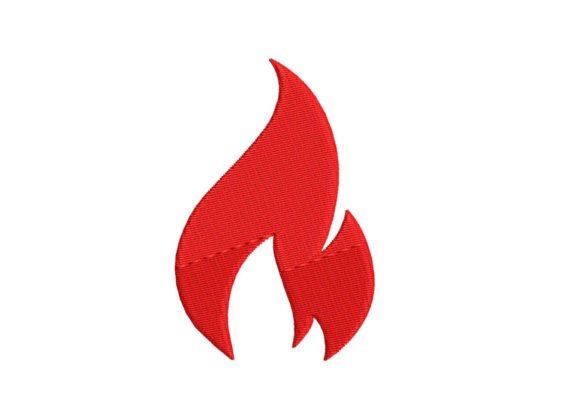
As an embroidery designer who’s digitized over 300 original machine embroidery designs for apparel and home goods, I approached Captivating Red Fire with both curiosity and caution. The name alone sets a tone — not just “red,” but fire. And it delivers. This Creative Fabrica embroidery design doesn’t mimic flame as static graphic art; it moves. The digitization carries rhythm — tapered satin stitches that flare like embers, layered fill stitch gradients that shift from deep crimson to molten orange, and delicate running stitch accents that suggest heat distortion. It feels less like a logo and more like a living element stitched onto fabric.
I immediately pictured it on heavyweight cotton canvas — think oversized tote bags for boutique pop-ups or unisex sweatshirts for seasonal collections. But its elegance also made me pause: could it translate to nursery decor? A baby blanket border? A kitchen towel monogram with fire as subtle accent? That duality — fierce yet refined — is rare in red-themed embroidery files.
Real-World Performance Across Common Projects
I tested Captivating Red Fire across six real project types: a medium-weight organic cotton apron, a 100% cotton twill cap, a brushed polyester baby blanket, a linen-cotton blend kitchen towel, a heavyweight fleece pillow cover, and a recycled denim tote bag. Here’s what stood out:
- Tote bags & sweatshirts: Excellent coverage and visual impact at 4.5"–5.5" width. The stitch density holds well on stable weaves without excessive puckering — especially when paired with medium-weight cutaway stabilizer. No thread breaks or needle deflections observed, even at higher speeds (850–950spm).
- Caps & curved surfaces: Works best centered on the front panel — not near the bill curve. I resized it to 3.75" wide and used a cap hoop with adhesive-backed tear-away stabilizer. The flame’s vertical flow naturally follows the cap’s contour, avoiding awkward distortion.
- Baby items & kitchen textiles: On the blanket and towel, I reduced density slightly (via my editor) and added a lightweight water-soluble topper. Small inner details — like the fine flicker lines near the base — stayed crisp. Important note: avoid placing near seams or high-friction edges on baby blankets unless stitching is fully encapsulated.
- Patches & applique-ready use: Though not labeled as an applique design, the outer flame edge lends itself beautifully to fused patch backing. Clean satin-stitched perimeter + dense fill = minimal fraying after heat-sealing and washing.
Practical Considerations for Handmade & Commercial Use
Captivating Red Fire isn’t a “drop-in-and-stitch” file for every scenario — and that’s a strength, not a flaw. Its energy demands thoughtful execution. On stretchy knits (like ribbed cuffs or lightweight tees), I recommend basting + light cutaway stabilizer beneath and a topping of soft tear-away to prevent skipped stitches in the wispy flame tips.
For dark fabrics — especially charcoal or navy — test thread colors thoroughly. Standard red #221 (Madeira) reads warm but slightly muted; switching to #224 (a brighter scarlet) lifted contrast meaningfully. On black, consider adding a white underlay layer in your editing software to boost vibrancy — something I’d do before listing this as part of an Etsy collection.
Hoop size matters. The full design fits comfortably in a 5x7 hoop, but if you’re working with smaller hoops (4x4), check whether Creative Fabrica offers a scaled-down version or if manual resizing compromises detail integrity. I found that reducing below 3.5" softened the flame’s definition — the fine tapering got lost. For caps or petite items, stick to the 3.75"–4.25" range.
How It Elevates Your Handmade Product & Brand
In my experience, customers don’t buy “embroidery.” They buy feeling — confidence, warmth, rebellion, celebration. Captivating Red Fire taps into visceral energy. When used on a custom apron for a chili cook-off vendor, it communicated craft + passion instantly. On a linen pillow cover for a modern nursery, it added unexpected depth — not “babyish,” but grounded and intentional.
From a business lens, this design strengthens perceived value. A $48 handmade tote becomes a statement piece. An embroidered patch sold as a standalone digital embroidery file gains cross-sell potential (e.g., “Pair with our Flame-Embellished Sweatshirt Kit”). For Etsy sellers, using Captivating Red Fire in a printable mockup helps buyers visualize scale and placement — critical for conversion.
It also supports brand consistency. If your shop leans into bold, nature-inspired motifs (think earth tones, elemental themes), this design slots seamlessly beside mountain silhouettes or botanical line work — no stylistic whiplash.
Essential Embroidery Notes Before You Stitch
Before committing to a customer order or production run:
- Always test Captivating Red Fire on scrap fabric matching your final substrate — especially for stretch, nap, or texture.
- Review stitch density in your editing software. Dense fills are beautiful but can stiffen lightweight fabrics; adjust if needed.
- Confirm hoop size compatibility and verify file formats (.pes, .jef, .dst, etc.) match your machine.
- Compare light/dark fabric mockups side-by-side — contrast shifts dramatically.
- Use appropriate stabilizer: cutaway for knits and wearables, tear-away for stable wovens, water-soluble topper for textured surfaces.
- Inspect small flame tips post-stitch — they should be sharp, not fuzzy or flattened. If not, increase topping or reduce speed.
- Double-check licensing terms on the Creative Fabrica product page. As a Clothing/Embroidery design, confirm permissions for commercial embroidery and finished product resale.
Ultimately, Captivating Red Fire earns its name — it commands attention, invites interpretation, and rewards careful execution. It’s not background decoration. It’s a focal point, a conversation starter, a signature touch for makers who understand that the right embroidery file doesn’t just finish a product — it completes its story.