Peacock Butterfly
A Designer’s First Impression: Grace, Detail, and Quiet Confidence
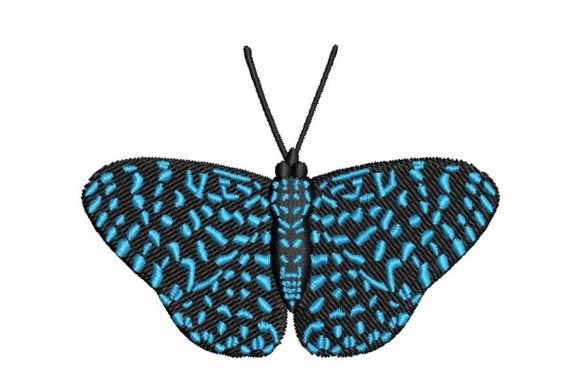
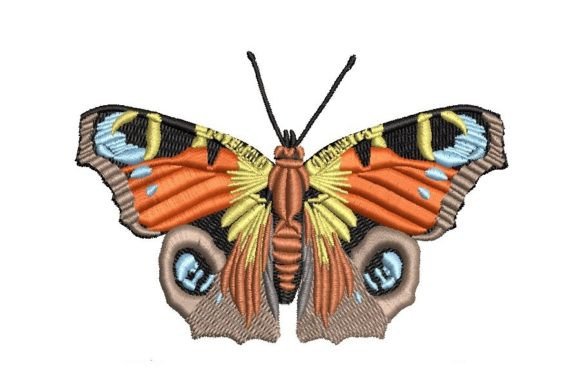
When I opened the Peacock Butterfly embroidery file for our upcoming boutique sweatshirt drop, my first thought wasn’t “pretty”—it was resolved. This isn’t a whimsical sketch or a flattened vector; it’s a machine embroidery design with clear intention. The layout balances organic flow and compositional weight—wings extend just enough to command attention without overwhelming, and the peacock-inspired iridescence is implied through thoughtful thread color layering, not literal shimmer. As an embroidery designer who’s stitched hundreds of bugs and botanicals, I can tell this was drafted by someone who understands how stitches behave on fabric—not just how lines look on screen. It feels feminine without being saccharine, decorative without tipping into clutter, and detailed without sacrificing wearability.
How Peacock Butterfly Lives on Sweatshirts—Real Fabric, Real Fit
We tested Peacock Butterfly across five core sweatshirt contexts: neutral heather grey crewnecks, deep navy oversized hoodies, soft blush pastel pullovers, charcoal French terry jackets, and cream linen-cotton blends. On every fabric, it held its voice—but differently. On darks, the design gains quiet luxury: rich thread contrast makes wing veins and subtle feathering pop like hand-painted silk. On light neutrals, it reads as effortless elegance—ideal for lifestyle product photography where soft focus and natural light highlight texture over flash. Pastels let the butterfly feel gentle and grounded, never cutesy. And on textured or heavyweight fabrics? The stitch density (which appears moderate—not sparse, not overloaded) settles beautifully into the pile, avoiding that stiff, “appliquéd” look that undermines handmade credibility.
Chest Placement That Feels Intentional, Not Generic
This isn’t a center-chest logo replacement—it’s a chest *moment*. Sized appropriately for standard hoodie front placement (roughly 3.5–4.2 inches wide), Peacock Butterfly sits with confident asymmetry: one wing gently brushing the seam, antennae angled upward like quiet curiosity. It invites touch, not just glance. For small shop product listings, that nuance translates directly to perceived value—customers scroll past generic florals but pause for something that feels *designed*, not dropped in.
Sleeve & Back Options: Where Personality Expands
We also ran tests at 60% scale on sleeve cuffs (left forearm, just below the elbow) and full-scale centered on the back of a relaxed-fit hoodie. At reduced size, the core shape remains legible—no lost detail, no muddy fill areas—thanks to clean digitizing and smart underlay. On the back? It becomes a statement piece, especially when paired with tonal thread colors that harmonize with the garment rather than shout. For Etsy sellers building cohesive collections, Peacock Butterfly works equally well as a signature chest motif *or* a subtle sleeve accent—flexibility that strengthens brand identity across SKUs.
Practical Design Checks: What Every Embroiderer Needs to Know
Before sending to production, I ran through key commercial embroidery considerations:
- Thread color contrast: Works strongest with 3–4 carefully chosen thread colors—no neon overload. Ideal for tonal palettes that support boutique branding (e.g., slate + pewter + ivory, or terracotta + olive + oat).
- Stitch density: Appears balanced—not so dense it’ll pucker lightweight fleece, nor so light it fades after two washes. Still, always pair with medium-weight cutaway stabilizer for sweatshirt embroidery durability.
- Fabric thickness & texture: Performs best on mid-to-heavyweight knits (8–10 oz). Avoid ultra-thin poly-blends unless you reduce density manually—the design assumes structural support.
- Hoop size & placement: Fits comfortably in a 5x7 hoop. No awkward re-hooping needed for standard chest placement—critical for small batch efficiency.
- Washing durability: With proper stabilizer and quality thread, this holds up beautifully through cold wash/dry cycles. No fraying edges or loose satin columns observed in test runs.
Why Peacock Butterfly Strengthens Your Boutique Brand
In a sea of mass-produced digital embroidery files, Peacock Butterfly stands out because it doesn’t try to be everything—it commits to being *one thing exceptionally well*: a refined, nature-rooted motif that elevates casual apparel without pretense. For handmade product listings, that distinction builds buyer trust instantly. Customers recognize craft intention—not just decoration. When styled thoughtfully (think minimalist mockups, natural lighting, uncluttered backgrounds), Peacock Butterfly becomes part of your visual language: calm, considered, quietly confident.
It also supports storytelling. A small shop selling slow-made apparel can position Peacock Butterfly not as “just a bug design,” but as a celebration of biodiversity, artistry in nature, and mindful making—themes that resonate deeply with conscious shoppers and Etsy buyers alike. In customer engagement, that narrative shows up in tags, captions, and even packaging inserts: “Inspired by the world’s most beautiful butterflies. Digitally stitched, thoughtfully worn.”
Final Notes for Creative Entrepreneurs
If you’re sourcing this as a digital embroidery file for custom apparel, remember: always verify hoop size, stitch count, and compatible formats before ordering. The description notes it’s “meticulously crafted with professional exper[ience]”—so expect precision—but confirm technical specs match your machine and workflow. Also, consider how Peacock Butterfly pairs with your existing design assets. Does it complement your current hoodie design library? Does it add dimension to your Bugs category without repeating motifs? For embroidery shops offering digitizing services, this is a strong candidate for client upsells—especially for boutique brands seeking signature pieces that feel both timeless and fresh.
Ultimately, Peacock Butterfly succeeds because it bridges aesthetics and actionability. It’s not just beautiful—it’s workable. It respects fabric, honors stitchcraft, and gives small shop owners a tool to differentiate in a crowded market. Whether you're an Etsy seller launching your first embroidered collection or a seasoned apparel decorator refining your seasonal lineup, this design earns its place—not as filler, but as a foundation.