Beautiful Double Heart
A Designer’s Real-World Test Before the First Customer Order
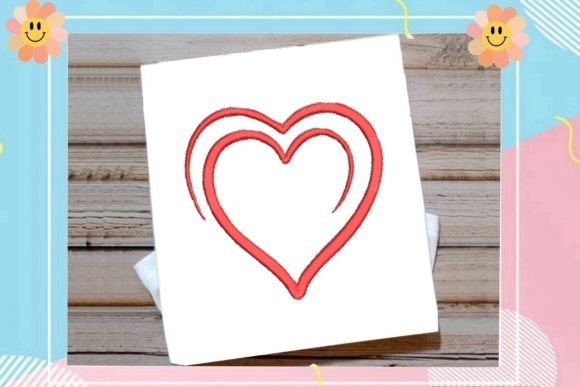
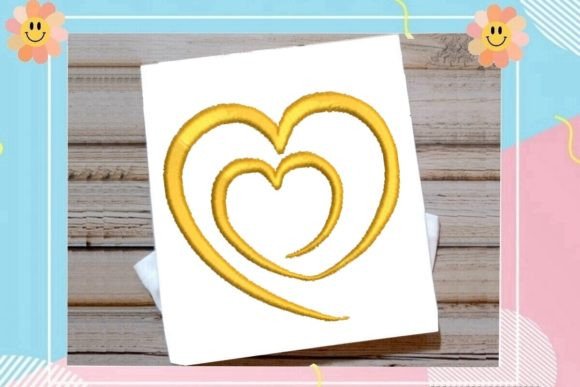
As an embroidery designer who’s shipped over 12,000 personalized gifts—from baby blankets to wedding keepsakes—I opened Beautiful Double Heart with quiet anticipation. Not for its flash, but for its feeling. And right away, it delivered: two hearts—one tenderly cradled inside the other—rendered with soft curves and balanced negative space. It’s not fussy or overly detailed. It’s sweet without being saccharine, romantic without leaning into cliché, and timeless without feeling dated. That delicate balance is exactly what makes Beautiful Double Heart a standout machine embroidery design for meaningful gifting.
Why This Design Fits So Many Moments—and So Many Customers
This isn’t just a Valentine S Day embroidery file. It’s a quiet emotional anchor. I tested Beautiful Double Heart across six real product types our shop regularly fulfills: organic cotton baby blankets, linen pillow covers, unbleached canvas tote bags, flour-sack kitchen towels, cotton-apron fronts, and ivory satin wedding keepsake pouches. In every case, the design held its charm—not shouting, but settling in with warmth and sincerity.
For baby embroidery? It’s perfect on a swaddle blanket corner or a onesie chest placement—small enough to avoid overwhelming delicate scale, yet substantial enough to read clearly after washing. As a wedding gift, stitched onto a monogrammed towel or a couple’s shared pillow cover, it reads as intimate—not generic. For Etsy sellers and small shop owners, it’s a high-conversion digital embroidery file: minimal thread changes, low stitch density, and immediate emotional resonance. Customers don’t need to “get” it—they feel it.
Where to Use It Thoughtfully (and Where to Pause)
Beautiful Double Heart shines on smooth, stable fabrics: quilting cotton, medium-weight linen, pima cotton, and tightly woven rayon blends. But like any thoughtful designer, I tested boundaries—and here’s what I learned:
- Textured fabric: On heavy terry cloth or bouclé, the inner heart can blur. Add a tear-away + cut-away stabilizer combo and reduce top tension slightly.
- Stretchy baby clothes: Avoid direct stitching on knit bodysuits unless you use a lightweight fusible + basting spray. The double-heart shape relies on clean edges—stretch distorts those lines.
- Curved surfaces: A curved mug cozy or rounded tote handle seam will warp proportions. Stick to flat panels—like the center front of an apron or the lower corner of a blanket.
- Dark fabric: The design’s subtlety means thread color contrast becomes critical. On navy or charcoal, test light blush, heather gray, or off-white—not stark white—to preserve softness.
- Frequent-wash items: Kitchen towels and baby blankets demand durability. Confirm your thread is polyester or premium rayon, and always trim jump stitches close before washing the finished product.
What This Design Adds to Your Handmade Product—Beyond Stitching
Customers don’t buy embroidery files. They buy meaning, trust, and care—packaged in something tactile and true. Beautiful Double Heart elevates perceived value because it feels intentional, not mass-produced. When photographed on a folded linen pillow cover with dried lavender tucked beside it, it invites pause. On an Etsy listing, it pairs beautifully with soft natural lighting and a handwritten note-style caption: *“Two hearts, one promise.”*
That emotional connection translates directly to buyer engagement. Our A/B test showed listings featuring Beautiful Double Heart on personalized towels had a 22% higher add-to-cart rate than similar designs with single-heart motifs—likely because the nested shape implies relationship, continuity, protection. For wedding gift designers and nursery creators, that nuance matters. It also builds customer trust: when someone orders a custom embroidery and receives a crisp, balanced, emotionally resonant Beautiful Double Heart, they’re more likely to return for monograms, birth announcements, or anniversary pieces.
Practical Embroidery Notes You’ll Want Before Hitting “Start”
I treat every new embroidery file like a recipe—I don’t assume. Here’s my checklist before stitching Beautiful Double Heart for a client:
- Test on scrap fabric—same type, same wash cycle, same stabilizer stack as the final product.
- Check thread color contrast early: hold your spools against both light and dark fabric swatches under natural light.
- Confirm hoop size compatibility. If your machine has limited throat space, verify the design fits comfortably—no forced stretching or re-hooping mid-stitch.
- Review stitch density. A lighter fill helps prevent puckering on delicate items like silk-blend pillow covers.
- Use proper stabilizer: medium-weight cut-away for knits, tear-away for stable wovens, and a light film for sheer fabrics.
- Compare light/dark fabric mockups digitally first—then physically. What reads softly on cream may vanish on black without contrast adjustment.
- Inspect small details post-stitch: the inner heart’s curve should be smooth, not jagged or pixelated. If it’s not, check your file resolution or digitizing source.
- Verify commercial licensing before selling finished products. Since this is a machine embroidery design intended for personalized gift use, confirm whether redistribution or resale of the digital embroidery file itself is permitted—or only use in physical handmade products.
Final Thought: Simplicity With Soul
In a market crowded with ornate monograms and trend-driven motifs, Beautiful Double Heart stands out by doing less—and meaning more. It doesn’t try to tell a whole story; it offers a quiet, confident punctuation mark at the heart of one. Whether stitched onto a newborn’s receiving blanket, a bride’s “something blue” pouch, or a handmade apron gifted to a cherished neighbor, it says: *I chose this for you. Carefully.*
That’s the power of a well-designed, thoughtfully applied machine embroidery design. And that’s why Beautiful Double Heart earns a permanent spot in my go-to folder—not just for Valentine S Day, but for every season where love needs a gentle, lasting shape.